
It’s hard to love a man whose legs are bent and paralysed.
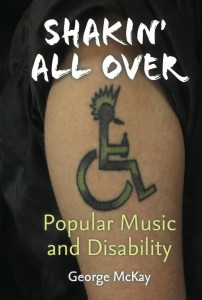 A second entry (like no. 10, The Who’s Tommy) not from disability as such but about it. A song that completely and effortlessly confirms ‘the ideology of ability’ (Tobin Siebers’ brilliant idea, from Disability Theory) in this single line. Doesn’t actually figure that much in my book, only a couple of times, and on both occasions in relation to some other point being discussed. But this song really stayed with me once I’d found it, and I must have watched this great televised performance from 1969 fifty, no, one hundred, times or more since. (Of course, it may be staying with me since my own legs are, well, a bit bent and paralysed.) In this section from Shakin’ All Over it is introduced in the context of discussing stuttering, vocal disfluency as disability and as marker of disability in lyrical pop.
… Emblematic here is the case of American country singer and songwriter Mel Tillis, who made a career in large part from the dynamic facilitative shift from spoken disfluency to sung fluency, including performing that shift on stage as he moved between inter-song comedic p-p-patter (often narratives about stuttering) and musical lyric. He had a casual neurological explanation: ‘you know, music comes from one side of your brain and your speech from the other side’.
Tillis released an album in 1975 entitled M-M-Mel, called his female backing group the Stutterettes, wrote an autobiography entitled Stuttering Boy, and has a website that instructs viewers to click the button to get ‘To the N-N-Next Page!’ He frequently observed that his stutter (one of the stories is that it was the result of a childhood bout of malaria) was the root of and route to his success, and felt comfortable enough late in his highly profitable country career to accept the public role of honorary chairman for the Stuttering Foundation of America. He never stuttered in song.
In one of those intriguing crip crossovers that I have found to be surprisingly common in researching disability in popular music, as a songwriter Tillis’s biggest early hit was ‘Ruby, don’t take your love to town’, first in 1967 for Johnny Darrell and then again only two years later for Kenny Rogers and First Edition.
It is an extraordinary country music song of disability experience, narrating from his first person perspective the emasculated and desexualised transformation of the unnamed military veteran returned home from ‘that crazy Asian war’, and its impact on the domestic sphere where he is now trapped and from which Ruby, his wife, escapes nightly for sexual fulfilment. He is diminished and she is dissatisfied, since, after all, ‘It’s hard to love a man whose legs are bent and paralysed’. Rogers delivers the word ‘paralysed’ with a facial gesture and head move that speak of not wanting to speak it. (He makes the same gestural delivery on that word in a 1972 performance.)
Indeed, the vet cannot even manage the soldier’s trained solution—killing the object: ‘If I could move I’d get my gun and put her in the ground’. Yes: if male normality returned, he could kill the unfaithful woman. In the 1969 First Edition version, Rogers’ repressed vocal delivery adds tremendously to the drama, and adds to the seriousness of the subject: the song’s resonance with US military veterans’ experiences and fears is clear. The dropping out of the guitars for a percussive break near the end (‘the slamming of the door’) strips it even further down, bare. We cannot and should not ignore the fact that this extraordinarily popular and (genderedly problematically) powerful song of male disability, twice a hit during the time of the Vietnam War, of course, was written by a disabled man, a man used to negotiating the mockery and rejection that followed his stutter, his every word.