
At least four of the seven deadly sins against which Christianity once railed are now seen by some to be venerated in Christmas celebrations: avarice, gluttony, lust, and envy. The conflict is by no means uniquely American … but America has contributed the uniquely American Santa Claus and has become an arbiter of Christmas celebrations around the world, primarily because of its part import of European emigrant traditions and its present export of popular culture. Russell W. Belk
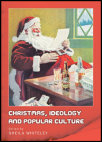
In what ways has the iconography and practice of Christmas been shaped, understood and consumed as an American experience? We should consider the ideological valence of Christmas in part as an American socio-economic and cultural (export) practice. Here I draw from a chapter I wrote entitled ‘Consumption, “coca-colonisation”, cultural resistance – and Santa Claus’ for a 2008 collection edited by the wonderful Sheila Whiteley (RIP XX), Christmas, Ideology and Popular Culture (Edinburgh UP).
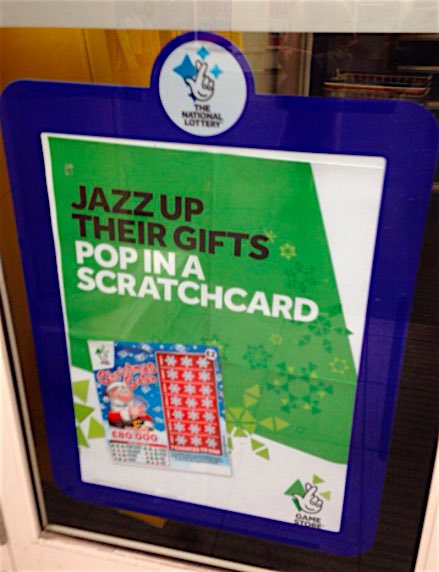 The admittedly very weak link with jazz comes about because I was prompted by an advertisement for lottery tickets I saw recently in a shop, that itself lightly linked jazz and the ‘festive’ spirit of Christmas, and it got me thinking again about some common aspects of their trasatlanticism. Jazz up the gift, indeed.
I do acknowledge the fact that Daniel Miller has identified a number of the international strands of influence operating transatlantically on Christmas from the mid-19th century on whereby ‘[t]his syncretic modern form extracts the Christmas tree from the German tradition, the filling of stockings from the Dutch tradition, the development of Santa Claus mainly from the United States, the British Christmas card’.
And it is telling that the two American artists responsible for the most influential visual representations of Santa Claus had strong European backgrounds: in the 19th century, cartoonist Thomas Nast (born in Germany in 1840), and in the 20th, advertising illustrator Haddon Sundblom (Sweden).
I recognise too the shifting relationship America has had with Christmas, it being historically sometimes hugely antagonistic: in early modern America Christmas was actually banned by the Puritans, though by the late 18th century some Americans were celebrating St Nicholas in part as an anti-British sentiment. In recent years the replacement of the seasonal greeting of ‘Happy Christmas’ by the faith-neutral ‘Happy holidays’ is a further small sign of the shifting relationship.
 Yet overall there are a cluster of issues around (American) consumption in relation to seasonal advertising, the global or hemispheric spread of secular and commercial Christmas, and some gestures of resistance towards this spread, which are important if debatably residual national aspects of Christmas, even as it has become, in Miller’s term, ‘today the global festival’ (emphasis original).
Following close on in the American calendar of ‘festivals of consumption’ from Halloween (candy, beer) and Thanksgiving (turkey) is ‘the festival of festivals, the only festival to achieve transcendental status – Christmas’, according to James B. Twitchell’s Adcult USA. Rather than ‘his evil twin Scrooge’, as Twitchell puts it, the key visual figure here is Santa Claus, born (kind of) in the United States in the 19th century.